
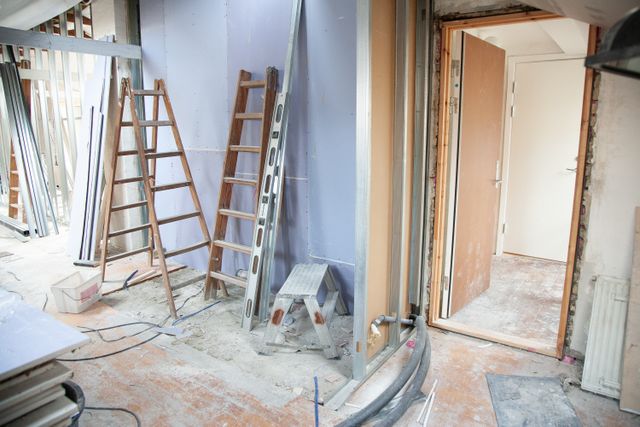
The reason why most large renovations exceed the budget is not that the materials are more expensive than planned or that the contractor is not honest. They go over budget because there are process errors, such as undefined scope, non-approved changes, lack of documentation, and communication only when it’s too late.
These aren’t rare mistakes made by careless homeowners – they’re the default outcome of an undisciplined process, and they happen on well-funded projects just as often as tight ones. The good news is that every one of these failure points is preventable with the right structure in place before the first wall comes down. Fix the process and the numbers will be fine.
Table of Contents
Why Budgets Actually Blow Out
If you talk to any project manager who has overseen a dozen or more (big) renovation projects, they’ll all tell you the same thing: it’s not usually one large disaster that kills your budget. It’s an accumulation of lots of tiny, unrecorded decisions. A better tile here. A bit of extra plumbing in that wall. “Just one small change” – on three separate occasions. And all of it paid for out of the petty cash till.
This is known as scope creep, and it’s the most common cause of cost overruns on renovation work. It’s insidious. It always feels harmless at the time because, well, it’s only a small change. But tiny cuts bleed and lots of small numbers quickly add up to a big one. By the time you start feeling faint, it’s often too late – you’re already thousands over budget and you have no clear record of why.
The solution is not a bigger budget. It’s a tighter process. Write down what’s included in the scope. Price every single change before you make it. And measure what you spend against the plan rather than against how much you think you can afford.
Write The Full Scope Before You Set A Number
You cannot accurately estimate the costs of a project that you have not totally defined. Before you invite someone to give you a price, compile a line-by-line written inventory of every room, fixture, finish, and trade task you will need. And don’t forget the items people often overlook – demolition and waste removal, electrical rough-in, plumbing relocations, painting, hardware, right down to the skirting boards and door handles.
A budget based on a notion (“redo the kitchen and open up the living space”) is essentially meaningless. A budget based on a meticulously prepared scope document, sometimes called a design spec, which details the full extent of the intended project, reflects the reality of what you are going to accomplish. That piece of paper or computer file is the benchmark for every price you get and the long-term yardstick for every decision you will make.
Whenever someone comes to you with a bright idea halfway through the job, you cross-reference it with the scope document. If it’s not in there, it’s a change order to be added to the bill, not an oversight.
Build A Real Contingency And Treat It As Fixed
Most experienced contractors will tell you they expect at least one budget-affecting surprise on a large job. Old wiring behind a wall you weren’t planning to open. A council requirement you didn’t know applied to your property. A product that’s discontinued three weeks before installation. None of these are rare. They’re normal.
Industry guidance, including recommendations from the National Association of the Remodeling Industry (NARI), commonly puts the contingency reserve at 10-20% of total project cost. That’s not a rounding error – on a $150,000 renovation, that’s $15,000 to $30,000 set aside specifically for unknowns.
The mistake most homeowners make is treating this money as flexible, something they can dip into for upgrades if they don’t hit a snag. Don’t do that. A contingency reserve is for in-scope unknowns – things that turn up because of what’s behind the walls or what council decides. It is not a backup fund for wanting nicer tapware halfway through.
Keep those two categories separate in your head and on paper, because if you blend them, you’ll have no buffer left when the actual surprise shows up.
Get Three Fixed-Price Quotes And Compare Scope, Not Just Price
Three quotes is the minimum, not a nice-to-have. But the number on the bottom of each quote tells you almost nothing on its own. What matters is what’s included.
One contractor’s fixed-price quote might include waste removal, permit applications, and a warranty on labor. Another’s might exclude all three, making it look cheaper on paper while actually costing more once you add those items back in. Read each quote line by line against your scope document. Where something’s missing, ask why. Where the price seems unusually low, ask what’s been left out to get there.
A fixed-price quote is valuable because it shifts materials and labor risk onto the contractor rather than onto you. But that protection only works if the scope in the quote matches the scope you actually want built. A cheap quote with a thin scope is often the most expensive option once change orders start rolling in.
Hire The Right Local Team And Track Spend Weekly
Local knowledge saves money in ways that aren’t always obvious upfront. A contractor who already understands your council’s approval process, has existing relationships with local trades, and knows which suppliers can actually meet your timeline will hit fewer of the surprises that blow out other people’s budgets. Proximity also means faster response times when something needs checking on-site, rather than delays that stretch your schedule and, by extension, your costs.
This is where a local contractor like Grand Solution Projects’ Northern Beaches team becomes a genuine budget safeguard rather than just a convenience. Established trade relationships and familiarity with municipal regulations in a specific area tend to prevent the kind of costly delays that come from unfamiliar permit processes or unreliable subcontractors brought in from outside the region.
Once work starts, track actual expenses weekly against your line-item budget. A simple spreadsheet works fine – what matters is the habit, not the tool. Compare planned spend to actual spend phase by phase. Don’t rely on your bank balance to tell you how the project’s going; by the time a bank balance looks alarming, you’re often already several weeks behind the point where a correction would have been cheap and easy.
Sequence The Project And Budget Each Phase Separately
Large renovations progress through various steps – design, council approvals, demolition, rough-in, and finishes. Each step has different costs and risks. It’s more difficult to identify issues early when you have budgeted the entire project as one amount.
Split your construction timeline into these steps and allocate a budget for each one. This will help you in two ways. Firstly, projected cash flow will become more manageable as you’ll have an estimate of expenses at every step, rather than losing track of the total expenses. And, you’re more likely to identify problems in advance. If the rough-in step exceeds your estimation by 20%, you will want to know this before the finishes begin, and not when the project is about to complete.
The time it will take for you to get the materials is also very important. If you order custom-made cabinetry or fixtures from abroad too late, you would not only delay the project but also end up with more expensive alternatives, which are purchased in a rush, because the original products are overdue. Hence, you must include the time required for material procurement in each step from the start, especially if you are ordering something on demand.
Lock In Materials And Set A Change-Order Protocol
The factor that can most easily cause your budget to increase is when homeowners decide to make changes once the work is underway. This is a very normal and human reaction – once you see a room stripped down and what lurks behind the walls, you may decide you want to upgrade your finishes or rethink the design. The problem is that all of these mid-project changes are more expensive than they would have been if planned for earlier because it means undoing work that the contractor has already organized, possibly reordering materials, and rescheduling trades.
Lock in your product selections and specifications before construction begins. Not “roughly decided” – fully decided, with brand, model, dimensions, and finish confirmed in writing.
For the changes that do come up, set a change-order protocol before work starts. Every proposed change to scope gets priced and signed off in writing before anyone touches it. No verbal agreements on-site, no “we’ll sort the cost out later.” If it’s not signed, the original plan proceeds. This single rule prevents more budget disputes than almost anything else on this list, because it forces both sides to agree on cost before the work happens rather than arguing about it after.
Hold A Pre-Construction Meeting And Set Payment Milestones
Before any work starts, gather everyone in a room – you, the contractor, any project manager or coordinator – and agree on what the communication will be like (weekly check-ins, site visits), when payments will be due, what completed work they will be tied to, and how disputes will be handled.
Payment milestones protect both the owner and the contractor here. Protects you because you’re not writing a series of four or five-digit checks in advance of the work being completed, and they can rest easy knowing there’s a specific point where they can expect payment after their work is done. Make the goal detailed, available for inspection, and non-disputable – you’re not paying for something on September 15th or when the rains stop. You’re paying when X work is completed, hopefully on or around September 15th, rain or shine.
Large enough of a project that it needs dedicated coordination, such as an apartment remodel or new construction? Budget separately for professional project management. It’s typically 5-10% of your total job cost, and it’s money you absolutely should be spending. This isn’t coffee shop business coaching, it’s someone who is ensuring that if there’s a problem with how components go together or when they’re scheduled to arrive it gets caught well before it requires rework.
Keep The Paper Trail, Keep The Control
A big renovation may seem like it’s all about hammers and blueprints but the reality is that a renovation runs on documents, not good intentions. Those aren’t fun to create, but they’re the tracks that keep the train from careening off cliffs. Scope documents and signed change orders protect your budget from paralysis by a thousand paper cuts.
Phase budgets make sure you’re actually leaving enough at the end to pay for the work you haven’t started yet. And the weekly tracking sheets help you identify those loose wheels before they blow the whole cabin.