
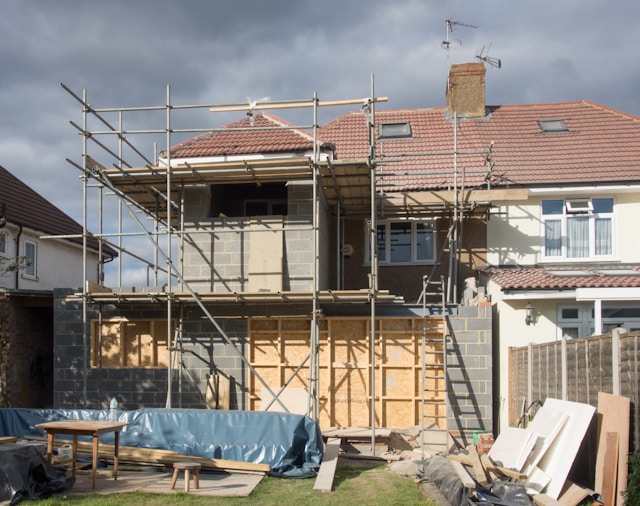
Indianapolis is currently experiencing a “Craftsmanship Vacuum”—a widening gap between the city’s aging, and high-character housing stock. For example, when you look across neighborhoods like Meridian-Kessler, Irvington, or the expanding suburbs, many homes feature original lath-and-plaster walls that have settled over a century. However, the high-speed labor force trying to service it isn’t matching up. That’s where modern “production-style” contractors become foundational; they renew and treat these homes like new-build suburban tract housing at the cost of your budget.
Table of Contents
1. Elevating Structural Finishing With Drywall Expertise: More Than a Boundary
Drywall is the home’s skeletal system. Hence expertise is crucial to prevent skeletal failures. When you partner with Drywall Services Indianapolis experts, quality results are guaranteed: from eliminating nail pops, to addressing settling cracks, and repairing seams that might otherwise ‘ghost’ through the paint.”
In a climate like Indiana, where humidity swings are extreme, structural finishing is the difference between a home that ages gracefully and one that feels like a constant chore.
- High-Tensile Integrity: Precision beads and compounds keep corners and transitions crisp for decades.
- Thermal and Acoustic Buffers: Dense drywall with insulation creates quiet, focused, and comfortable zones.
- The Seamless Standard: The ultimate goal of drywall expertise is the “Invisible Restoration.”
Every patch, every taped join, and every repair must disappear entirely under a coat of paint, even when hit by the unforgiving angle of direct sunlight.
2. Ceiling Texturization with Intent: Designing Physics of Light and Cognitive Calm
Ceilings represent the largest, most uninterrupted surfaces in any home, yet they are habitually ignored until they fail. A dated popcorn ceiling or a heavy, aggressive “stomp” texture does more than just look old; it acts as a light-sponge and a dust-trap.
These textures create thousands of micro-shadows that physically dim a room and visually lower the “sky” of the interior.
- Smooth Reflective Leverage: Level-5 finishes reflect light, brighten rooms, and reduce artificial lighting.
- The Art of Texture Synthesis: Hand-applied “suede” plaster or micro-stippling masks imperfections while respecting historic character.
- Auditory Shielding: Acoustic insulation creates quiet, peaceful rooms.
When the ceiling is right, the room feels taller and the mind feels clearer. It is a neurological upgrade that allows a space to finally behave like a sanctuary.
3. Re-Imagining Cabinetry Design: Storage in Design
Cabinetry is often mistaken for furniture, but in a well-engineered home, it is a structural extension. Most retail cabinets are “fillers”—they leave awkward gaps, fail under the weight of modern stone tops, and disrupt the visual flow of the room.
True cabinets’ revitalization demands a more integrated approach.
- The Built-In Standard: Whether it is a floor-to-ceiling library bookcase or a custom bar in the study, these units should meet the moldings and the ceiling with zero tolerance. This creates a sense of “permanence” that stock units simply cannot replicate.
- Niche Engineering: Modern Indianapolis living often requires more function in less square footage. Cleverly recessing storage into wall cavities—using the space between the studs—creates “Functional Minimalism.” It adds utility without sacrificing floor space.
- Weight and Flow Calibration: Every custom unit is built for its specific purpose. A bathroom vanity must resist different stressors than a kitchen bar.
By treating cabinetry as a visual and structural extension of the home’s DNA, the daily “cognitive load” of clutter vanishes. The space stops being something to manage and starts being something that supports the family’s rhythm.
4. Design Synergy: Infusing Functionality within the Existing Shell
Revitalization does not require the “bundle” cost of moving load-bearing walls. Often, the most dramatic redesigns are achieved by working with the home’s existing proportions and refining them through design hierarchy.
- Redefining the Purpose: A room can be entirely repurposed through a strategic build-in. A neglected corner becomes a high-performance desk niche; a flat wall becomes a tiered display.
- Textural Hierarchy: Shifting the texture of a single wall or the finish of a ceiling adds depth. This creates a “visual map” that guides the eye and settles the room.
- Proportional Integrity: Every intervention, from the trim to the cabinetry finish—should respect the home’s original era. Whether it’s a mid-century modern or a classic Victorian, the goal is architectural alignment.
When design is reality-based, the home feels newer and more comfortable without the structural chaos of a total “gut” renovation. It is luxury achieved through restraint.
5. Restoring the Invisible as the Foundations of Wellness
The most valuable improvements are often the ones an occupant eventually forgets are there. These are the “Deep Clean” foundations that keep a home performing at its peak.
- Texture Matching and Density: Match plaster density and pattern for seamless, lasting repairs.
- Biological Optimization: Dust-containment protocols during the work improve air quality and wellness. A home that doesn’t trap allergens in ceiling “nooks.”
- Sub-Surface Resilience: Moisture barriers and level sub-surfaces ensure that the beautiful finish on top never has to fight the structure beneath it.
Restoring the invisible ensures that the home remains a long-term asset, visually quiet and structurally sound for a lifetime.
6. Hiring and All-In –One Contractor: Single-Chain Accountability
The modern construction industry is often a “Telephone Game” of salespeople, project managers, and rotating subcontractors. In such a fragmented model, or rather broken contractor, information is passed through a chain: Salesperson → Project Manager → Lead Subcontractor → Day Laborer. That results to the homeowner paying more for an inferior result.
- The Expert Link: The construction estimator is the builder. This “Single-Chain” model ensures that no detail is lost in transition.
- Behavior as Warranty: When the engineer is the installer, accountability is built-in. There is no “other guy” to blame. Because they are wholly accountable, they won’t use a “provisional” fix that will fail in six months.
- Sanctuary over Project: For an Indianapolis homeowner, this approach transforms the renovation from a stressful project to manage into a sanctuary to enjoy.
Trust isn’t found in a contract; it is found in the consistent behavior of a craftsman who is personally invested in every surface.
In essence, modern interior revitalization in Indianapolis’ homes is not about chasing the “look” of a magazine; but disciplined application of expertise, strategy, and intentionality. By addressing light, sound, and structure through these human-centered interventions, a house ceases to be a mere dwelling. It evolves into a high-performance sanctuary where architectural value, daily comfort, and budget-friendly solutions converge naturally.